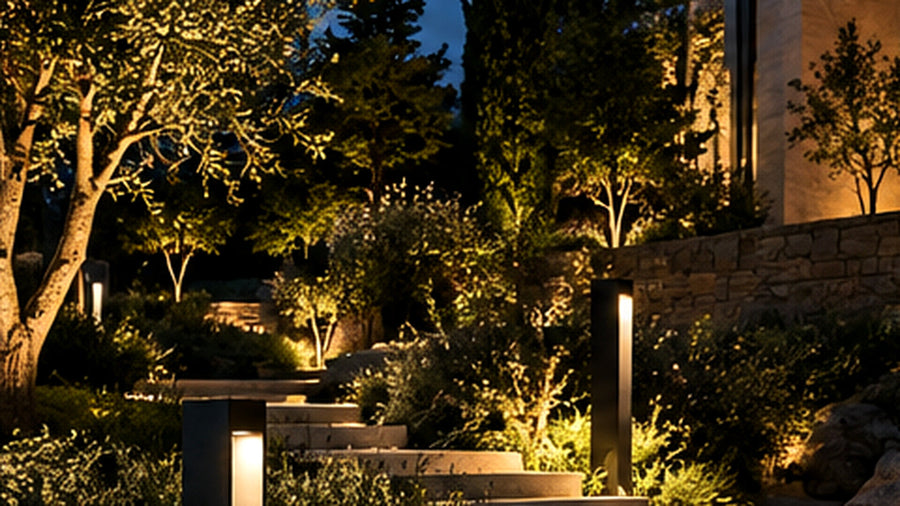
A well-lit facade can make a building feel welcoming, legible and distinctive after dark. But a successful result depends on more than choosing a powerful fixture. Outdoor LED wall washers must work with the building's geometry, surface texture, viewing angles and maintenance conditions.
This guide explains how architects, lighting designers and project buyers can compare wall-washing fixtures without relying on wattage alone.
Wall washing vs. wall grazing: choose the intended effect first
Although the terms are sometimes used interchangeably, wall washing and wall grazing create different visual results.
- Wall washing aims for a relatively smooth, even layer of light across a vertical surface. It works well on clean architectural facades, entrance walls and large uniform planes.
- Wall grazing positions light closer to a textured surface to emphasize shadows and material relief. It can bring out the character of stone, brick and ribbed concrete, but may also exaggerate imperfections.
The correct choice depends on what the designer wants visitors to notice: the wall as a calm surface, or the texture of the wall itself. Some linear fixtures can support both effects with different optics and mounting positions.
1. Look at beam distribution, not just beam angle
A product listing might state a 15°, 30° or 45° beam angle. This is helpful, but it is not a complete description of the light pattern. A wall washer may use an asymmetric distribution, spreading illumination upward and outward in a way that a conventional symmetric spotlight does not.
Ask for the photometric file—typically IES or LDT—and a light-distribution curve. With this data, the project team can model the facade, estimate vertical illuminance, and check whether adjacent fixtures will create dark gaps or distracting bright spots.
For a long, flat wall, uniformity may matter more than maximum center-beam intensity. For a narrow column or a textured feature, a tighter distribution may produce the intended accent.
2. Set the mounting position and fixture spacing
Mounting distance changes the appearance of the entire facade. A fixture close to the wall usually creates stronger texture and more pronounced shadows. A fixture farther away can produce smoother coverage, although the design will depend on the optic and height.
Do not copy a fixed spacing rule from an unrelated project. Instead, confirm:
- The height, width and material of the illuminated wall.
- The proposed setback from the surface.
- The spacing between fixtures and the aim angle.
- Whether occupants or pedestrians can see the light source directly.
- Whether there is room to access the fixture and its connections later.
A lighting simulation and, where possible, a night-time mock-up are more reliable than choosing spacing from a product photograph. Manufacturer-specific spacing guides can provide a starting point, but they are not universal rules.
3. Select color temperature and light quality intentionally
Light color can dramatically alter perceived material finishes. Warm-white light often creates an inviting atmosphere on stone and timber. Neutral-white light may suit certain commercial facades where a cleaner visual impression is required.
Ask for the available correlated color temperatures (CCT) and color-rendering information where accurate color appearance matters. If the facade combines several fixtures, avoid mixing poorly matched color points or LED batches. For dynamic effects, verify the exact control protocol and compatibility with the chosen controller.
Responsible exterior lighting should also consider spill light. DarkSky International recommends directing light only where needed, avoiding excessive brightness, using controls and choosing warmer color where practical. A dramatic facade should not have to illuminate the surrounding sky.
4. Check outdoor protection and long-term durability
Outdoor LED wall washers may face rain, dust, sun exposure, windborne dirt and temperature changes. The IP rating describes tested ingress protection under IEC 60529, but it is only one part of durability.
For each project, review the actual installation environment and verify the specified IP grade. Also ask about:
- Housing material, finish and corrosion considerations.
- Lens or cover material and UV exposure.
- Cable entries, connectors and drainage details.
- Thermal management at the intended ambient temperature.
- Driver location, surge protection and maintenance access.
Do not assume an IP number alone proves suitability for coastal locations, prolonged immersion or every cleaning method. Request supporting test documents where the specification requires them.
5. Confirm wiring, dimming and controls
An effective facade design needs a dependable control plan. Some projects use simple on/off operation; others need dimming or programmable color scenes. Discuss input voltage, power-supply architecture, cable runs, compatible dimming methods and commissioning requirements before ordering.
For controllable linear fixtures, check whether the exact version supports the protocol you intend to use—such as DMX-based control—and ask for wiring diagrams. Product families can contain several electrical variants, so specifications should always be confirmed for the actual order code.
6. Request a complete sample and specification pack
Before final approval, a useful purchasing checklist includes:
| What to request | Why it matters |
|---|---|
| IES/LDT photometric file | Enables reliable beam and spacing studies |
| Dimension and mounting drawings | Confirms clearance, brackets and positioning |
| IP test information | Supports outdoor-enclosure selection |
| Finish and CCT options | Helps match architectural materials |
| Electrical and control diagrams | Reduces installation surprises |
| Sample unit or mock-up | Validates the real appearance on site |
A well-defined sample review saves time for both the project team and the manufacturer.
FAQs about outdoor LED wall washers
Are wall washers and floodlights the same thing?
Not necessarily. A floodlight often projects a broader beam toward an area or object, while a purpose-designed wall washer may use optics tailored for even vertical illumination. Compare the actual photometric distribution rather than the product label alone.
Is a higher wattage always better for facade lighting?
No. Optical efficiency, mounting geometry, surface reflectance and light control can matter more than raw wattage. More light may create glare, uneven patches or unnecessary energy use.
Can I use the same wall washer indoors and outdoors?
Only when the chosen model is suitable for both environments, including its electrical installation, enclosure rating and thermal conditions. Confirm with the manufacturer and local installer.
Bring light to the architecture—not beyond it
The best architectural lighting is considered from the earliest stages of the project. Start with the wall, define the desired effect, then select an optic and fixture that support it. BTR's LED wall-washer category is one possible starting point for a technical discussion; share your facade drawings, mounting constraints and target appearance when requesting product recommendations.
Further reading: ERCO: wall-grazing lighting arrangements · IEC 60529: IP Code · DarkSky: Five Principles for Responsible Outdoor Lighting